
Recruitment is the first chapter of retention. When the hiring process, messaging, and first 90 days are designed with loyalty in mind, brokers dramatically reduce churn, increase productivity per agent, and strengthen culture. In this Knowledge Base guide, we outline how to embed loyalty into every step of recruiting—from the first impression to an agent’s first closing and beyond—so agents feel seen, supported, and successful with your brokerage for the long term.
Executive Summary #
Loyalty begins before day one. Agents evaluate trust, support, and growth potential during recruitment. The brokerages that win loyalty consistently do five things well: they make explicit promises and keep them; they hire for fit as much as production; they map a clear 30-60-90 day success path; they foster community and recognition from the outset; and they track leading indicators of loyalty (activation, engagement, enablement) alongside lagging outcomes (retention, production). This article provides a complete framework: loyalty-forward messaging, segmented recruiting campaigns, structured interviews, transparent offers, onboarding that activates, growth ladders, support SLAs, recognition systems, measurement dashboards, and ready-to-use templates you can implement today.
Why Loyalty Starts in Recruitment #
The recruiting experience telegraphs what it feels like to work with you. Speed of response, clarity of offers, transparency of fees, access to resources, and cultural signals—these all shape trust. If recruiting promises are generic or fuzzy, agents assume the experience will be the same after they join. Conversely, when your process is organized, supportive, and specific to their goals, loyalty starts forming before they sign. Loyalty-first recruitment is built on five principles:
- Clarity of promise: Be explicit about compensation, fees, support, technology, and expectations. Publish it. No surprises.
- Fit before volume: Hire to your culture, playbooks, and operating model. The wrong fit hurts retention more than an empty seat.
- Enablement on day zero: Agents should see their first 7–14 days laid out before they join, with clear outcomes, resources, and people.
- Growth pathways: Show how they can advance—individual producer, team leader, mentor, broker associate—so they can picture a future with you.
- Community and recognition: Connection and appreciation are the emotional bedrock of loyalty. Start both during recruiting.
Design Recruitment Messaging That Signals Long-Term Alignment #
Build a Loyalty-Focused Employer Value Proposition (EVP) Your EVP is the concise narrative that answers: “Why should a high-caliber agent build their career here for the next 3–5 years?” Structure it in four parts that explicitly drive loyalty:
- Financial clarity and fairness: Splits, caps, per-transaction fees, E&O details, any monthly fees, and when fees reset. Use ranges and concrete examples.
- Enablement and support: Technology stack (CRM, transaction management, marketing suite), onboarding plan, mentorship, marketing resources, and service-level expectations (e.g., contract review turnaround <24 hours).
- Growth and recognition: Career tracks, leadership opportunities, training cadence, production awards, and peer recognition programs.
- Culture and community: How your brokerage collaborates virtually or in-person, how agents get help fast, and what communication looks like week to week. Keep promises you can keep. Loyalty erodes faster from a broken promise than from an unoffered perk.
Segment Messaging by Agent Type Different segments value different things. Tailor your EVP and creative: New agents: Confidence, coaching, clear playbooks, marketing-in-a-box, and fast access to a mentor. Emphasize “earn your first commission in X days” plans and show a week-by-week calendar. Experienced agents: Net take-home, low friction, speed to close, strong TC support, and the ability to brand themselves. Emphasize real fee transparency, cap math, and tech that won’t slow them down. Team leaders: Hiring support, ISA/lead routing options, sub-branding, admin leverage, and economic incentives for their team. Emphasize scalable systems, reporting, and leadership pathways. Niche specialists (luxury, investment, commercial, relocation): Specialized marketing assets, niche MLS/tools, dedicated masterminds, and case studies in their niche. Emphasize credibility and proof.
Show Proof, Not Platitudes Trust is earned with evidence. Incorporate: Transparent fee tables with examples (e.g., “On a $500k transaction at 2.5% gross, your net is $X after our $Y fee; cap effects illustrated”) Screenshots or short demos of your actual tech stack (CRM, TMS, marketing center) Onboarding calendar excerpts (first 14 days, with checkpoints and outcomes) Agent outcome stories with process, not just results (what playbooks they used to hit those outcomes) A written support SLA (e.g., “Broker email responses in <24 hours M–F; compliance review within 1 business day; escalation path”)
Build Loyalty into the Funnel: From Awareness to Advocacy #
Map a loyalty-first recruiting funnel with stage-specific experiences: Awareness: Social ads and landing pages emphasize clarity and proof. Include fee transparency, onboarding previews, and culture signals. Interest: Quick-response scheduling, pre-call materials (one-pager, onboarding snapshot, comp calculator), and tailored case studies by segment. Consideration: Structured discovery, mutual-fit scoring, tool demos with a sandbox account, and introduction to a prospective mentor or team leader. Commitment: A written Offer Summary that restates everything promised: fees, tech stack, onboarding schedule, support SLAs, and growth pathways. Onboarding: Day 0 welcome kit, Day 1 activation checklist, mentor assignment, and a clear first-30-day production plan. Celebrate first milestones publicly. Activation: First listing, first offer written, first deal under contract, first closing; announce and recognize each step. Advocacy: Invite new agents to contribute tips to the knowledge base, co-host webinars, or mentor. Recognition increases belonging; belonging fuels loyalty.
Structure the Interview Experience to Build Trust Use a structured, mutual-fit process: Discovery call (30 minutes): Understand goals, pain points, niche, past support gaps, preferred work style, and how they define success. Value alignment session (45 minutes): Walk through the EVP, show the onboarding calendar and tech, review support SLAs, and answer hard questions. Practical preview (30–45 minutes): Hands-on mini-demos of CRM/TMS and marketing center using a real or demo listing or buyer sheet. Let them click, not just watch. Mentor/peer intro (15–30 minutes): Short conversation with a potential mentor or peer in a similar niche or market. Offer review (15–30 minutes): Summarize the agreement, onboarding dates, early milestones, and who does what by when. Share the agenda in advance and start on time. The experience is the message.
Offer Design: The Loyalty-First Offer Checklist Your written Offer Summary should include: Compensation model: Splits, caps, per-transaction fees, E&O, monthly fees (if any), payment timing, and when caps reset. Support SLA: Broker availability, compliance turnaround, marketing support, and escalation path. Onboarding plan: Dates, mentor assignment, 30-60-90 milestones, and the tech provisioning checklist. Resources and access: CRM, transaction management, marketing library, training calendar, knowledge base, and communities. Recognition and growth: How to qualify for awards, leadership opportunities, and mentoring roles; how revenue or incentive programs work. Mutual commitments: What you promise and what the agent commits to (meetings, training completion, brand standards, data hygiene). A transparent, itemized offer builds trust—and trust accelerates loyalty.
Onboarding as a Loyalty Engine #
Agents decide whether to emotionally commit to a brokerage in the first 30 days. Treat onboarding as your loyalty engine, not a paperwork checklist.
Day 0 to Day 7: Activation and Confidence Day 0: Welcome email with the onboarding calendar, key contacts, and a short welcome video from leadership. Provision accounts (CRM, transaction management, email, marketing center, e-signature) before Day 1. Provide a “First 7 Days” checklist (see template below). Day 1: Live orientation (60 minutes): how to get help fast, the tech map, where to find resources (SharePoint or other knowledge base), and the first milestones. Introduce mentor, onboarding specialist, and community channels (Teams, Slack). Day 2–3: Tech deep dives (CRM foundations, TMS basics, e-signature workflows). Create or import contacts, set up smart lists, and build at least one buyer and one seller pipeline view together. Day 4–5: Marketing activation. Launch a branded listing presentation, social announcement posts, an email re-introduction to their sphere, and two neighborhood landing pages. The goal: first conversations, not perfection. Day 6–7: First accountability checkpoint. Review CRM setup, confirm marketing launches, and schedule the next two weeks’ prospecting blocks. Celebrate progress publicly in your community channel. Pro tip: Give every new agent two pre-qualified appointments or opportunities in week one if your model allows it (e.g., company leads, open houses, co-listing). Action fuels confidence; confidence fuels loyalty.
Weeks 2–4: First Wins and Community Weekly cadence: 1:1 with mentor (30 minutes), group coaching or mastermind (60 minutes), and pipeline review (15 minutes). Target milestones: first two buyer consultations and one listing presentation; first offer written or listing taken by day 21 if experience level allows; otherwise, at least three live opportunities created in CRM. Community rituals: daily or thrice-weekly standups, “win of the day” posts, and Friday recognition roundups. Rituals make culture tangible.
Days 31–90: From Activation to Acceleration Skill sprints: negotiation clinic, listing mastery, pricing strategy, sphere growth, and referral systems. One sprint per week with assignments. Production goals: tailored by agent type, but explicitly defined (e.g., 8–12 buyer consultations, 3–5 listing appointments, 2–4 contracts by day 90 for full-time experienced agents; new agents may target activity milestones). 90-day graduation: certificate or badge, public recognition, and an invitation to give feedback on onboarding to improve the system. Closing the loop increases loyalty and continuous improvement.
Mentorship That Scales and Sticks Design your mentor program with structure: Matching: Pair by niche, market, or work style. Share a short “How I work” profile for both parties. Cadence: Weekly 30-minute meetings for 12 weeks, then bi-weekly for another 12 weeks. Define agendas: pipeline, skill focus, roadblocks, commitments. SLA: Mentor response within 24 hours on business days. Onboarding specialist as a backup. Recognition: Track mentee outcomes and recognize mentors with public appreciation, stipends, or production credits. Playbooks: Provide mentors a simple guide for the first 12 weeks (prompts, checklists, and resources).
Technology as Trust Tech either delights or frustrates. Loyalty grows when tools are reliable, integrated, and supported. Intuitive stack: CRM, transaction management, e-signature, marketing center, and reporting that work together. Avoid redundant tools. Provisioning and SSO: Agents shouldn’t juggle passwords. Use single sign-on where possible. Support: “How-to” video library, searchable knowledge base (e.g., SharePoint), and real-time help channels. Publish SLAs for tech support responses. Training: Live recurring classes with rotating times, plus on-demand modules. Recordings indexed with timestamps.
Growth and Recognition Frameworks That Retain #
Career Ladders: The Path to Staying Show how an agent can grow without leaving. Common tracks: Individual Producer: Mastery badges, advanced marketing resources, and access to premium lead programs after X production. Team Leader: Hiring support, team comp models, sub-branding, and operational coaching. Mentor: Training certification, mentee cap credits or stipends, and special recognition. Broker Associate/Leadership: Market expansion, recruiting support, P&L visibility, and leadership bonuses where allowed. Publish the ladder, requirements, and benefits. Clarity breeds commitment.
Continuous Education That Matters Offer a learning path that maps to production realities: Foundation: CRM mastery, contracts, pricing, presentation skills, marketing basics. Acceleration: Negotiation frameworks, objection handling, listing system, investor relations, luxury protocols. Leadership: Team hiring, coaching, operations, financials, recruiting, and brand strategy. Make it practical: “Do it in the room” workshops where agents complete assets live (listing deck, CMAs, email campaigns). Skill to asset to action—within the session—earns loyalty.
Recognition That’s Frequent, Fair, and Visible Mix formal and informal recognition: Formal: Monthly production awards, 90-day graduations, annual honors (Top Producer, Rookie of the Year, Mentor of the Year). Informal: Weekly shout-outs, “micro-wins” channel, peer kudos. Celebrate behaviors you want repeated (data hygiene, mentoring, community involvement), not just big GCI wins. Make criteria transparent and attainable. Recognition that feels rigged undermines loyalty.
Communication Cadence and Support SLAs #
Support turns intent into loyalty. Publish and uphold your standards. Communication cadence: Weekly: Team update post (wins, training, announcements), mentor 1:1s, pipeline huddle. Monthly: Market insights briefing, skill workshop, broker AMA. Quarterly: Business planning session and progress review. Support SLAs: Broker responses: Within 24 hours on business days; urgent deal questions via a dedicated escalation channel. Compliance review: Within 1 business day for standard files; rush options with defined criteria. Marketing requests: Standard templates self-serve; custom requests with defined turnaround times. Clear expectations reduce anxiety and prevent the “support lottery” feeling that drives attrition.
Feedback Loops and Conflict Resolution Use pulse surveys at 14, 30, and 90 days to catch issues early. Ask about clarity, support, tools, and sense of belonging. Use a simple 1–10 scale and open-ended prompts. Publish what you heard and what you changed—closing the loop signals respect. For conflicts, provide a neutral escalation path (onboarding specialist or operations manager) and document resolutions. Predictability breeds trust.
Compensation Transparency and Financial Loyalty #
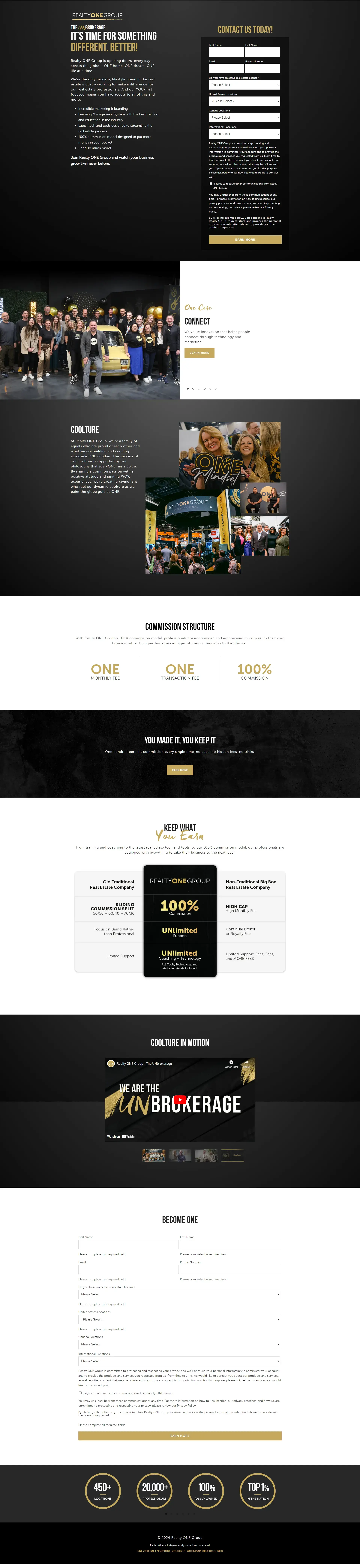
Money isn’t everything, but hidden costs kill loyalty. Build a compensation page and an interactive calculator that show: Splits, caps, and reset dates Per-transaction fees and what they cover (e.g., E&O) Optional monthly platform fees and what’s included Examples at common price points and commission rates Effects of caps over a rolling period For brokerages operating with 100% commission or low per-transaction models, emphasize how caps or flat fees protect an agent’s economics. If you’re a non-association (non-realtor) or Thompson broker model, clarify how forms access, lockbox, and E&O work within your jurisdiction and what’s included. Radical transparency builds long-term trust, especially for experienced agents who have been burned by opaque fee structures elsewhere.
Measurement: Loyalty Metrics, Dashboards, and Cohorts #
Define and track both leading and lagging indicators of loyalty. Leading indicators (first 90 days): Activation rate: % of new agents who complete Day 7 and Day 30 checklists Time to first listing/offer/closing Training engagement: % completing core modules by day 30/60/90 Mentor cadence adherence: % of scheduled 1:1s completed Platform engagement: Weekly CRM logins, contacts added, tasks completed Community engagement: Posts or reactions in community channels; attendance at masterminds Lagging indicators (ongoing): 90-day retention rate and 12-month retention rate Median time-to-cap (if applicable) Production per agent (median, not just average) GCI per agent and split of buy-side vs. list-side Referral rate: % of agents referring other agents Promotion rate: % moving into mentor/team leader roles Build a dashboard that shows cohorts by start month. Compare cohorts that experienced different onboarding tweaks. Cohort analysis reveals which changes move the needle and prevents averages from hiding problems.
Experimentation: Improve Loyalty with Small, Measurable Changes #
Treat loyalty as a product you iterate. Run controlled experiments: Messaging tests: A/B test offer summaries that include different proof elements. Onboarding tests: Pilot a “two appointments in week one” program versus control. Mentor program tweaks: Increase cadence for new agents and track activation rate changes. Recognition tests: Introduce weekly micro-win shout-outs and measure community engagement. Document the hypothesis, metric, and result. Roll out winners, retire losers, and keep improving.
Automation: Scale Loyalty Without Feeling Robotic #
Smart automation supports humans; it doesn’t replace them. Recruiting and pre-boarding automation: Instant lead acknowledgment with a human follow-up scheduled Calendar booking links with segment-based prep materials Pre-offer sequences delivering fee transparency, onboarding snapshots, and mentor intros Post-acceptance pre-boarding: account provisioning tickets auto-created; welcome email and calendar invites auto-sent Onboarding automation: Day-based reminders for mentor meetings and training sessions “Done for you” tasks that auto-create marketing assets once the agent fills a single profile form Pulse surveys at days 14, 30, and 90 triggered from your CRM or marketing platform Community automation: New agent welcome post on Teams or Slack Automated “micro-win” prompts asking agents to share one success each Friday Escalation automation: Keywords in help channels (e.g., “urgent contract”) trigger alerts to compliance or broker on duty Tools that work well for this approach include a CRM with marketing automation, a task manager for onboarding workflows, and a central knowledge hub. Many brokerages run this with HubSpot (workflows and sequences), Asana (onboarding tasks), and SharePoint (agent portal and training library). Teams or Slack keeps community conversations live and searchable.
Common Pitfalls That Erode Loyalty—and How to Fix Them #
Overpromising in recruiting: If the reality doesn’t match the pitch, agents disengage. Fix: Put every promise in writing and tie it to a system owner and SLA. Chaotic onboarding: Too much to learn, not enough support. Fix: Publish a 30-day calendar with outcomes, not just meetings; provide a single source of truth for resources. Tool sprawl: Too many logins, overlapping tools. Fix: Consolidate and integrate; document the “golden path” for common workflows. Invisible support: Agents don’t know who to ask or how quickly they’ll hear back. Fix: Publish your help map and SLAs; create a “broker on duty” schedule. Recognition for the few: Only the top producers ever get celebrated. Fix: Add weekly micro-wins and skill/behavior awards. No growth path: Agents can’t see a future beyond production. Fix: Publish career ladders and the requirements to move up. Silence after onboarding: Support drops off at day 31. Fix: Maintain monthly check-ins for the first year and a quarterly business review cadence thereafter.
Templates and Tools You Can Use Today #
Employer Value Proposition (EVP) Worksheet
Audience: [New | Experienced | Team Leader | Niche]
Financial Clarity:
- Split(s):
- Cap:
- Per-transaction fee(s):
- E&O details:
- Monthly fees (if any):
Enablement & Support:
- CRM:
- Transaction management:
- E-signature:
- Marketing library:
- Onboarding plan (30-60-90):
- Support SLAs:
Growth & Recognition:
- Career tracks:
- Awards cadence:
- Mentorship:
Culture & Community:
- Communication channels:
- Rituals (standups, masterminds, AMAs):
- Events:
Proof to Publish:
- Fee table example:
- Onboarding calendar excerpt:
- Tech screenshots:
- Case study:
Agent Persona Card
Name: [“Experienced Suburban Listing Agent”]
Experience: [Years, production range]
Motivations: [Economics, speed, personal brand]
Pain Points: [Hidden fees, slow support, clunky tech]
Desired Outcomes: [Higher net, faster closings, brand flexibility]
Key Messages: [Transparent fees, SLA-backed support, tech that speeds work]
Proof Points: [Calculator, SLA, onboarding preview, mentor intro]
Structured Interview Scorecard
Fit (0–5):
- Values alignment
- Work style compatibility
Enablement Need (0–5):
- Training needs vs. resources available
- Tech proficiency
Intent & Momentum (0–5):
- Readiness to move
- Clarity on goals
Niche Alignment (0–5):
- Market segment fit
- Geography/strategy fit
Red Flags (notes):
Decision: [Advance | Nurture | Decline] with reason
Loyalty-Forward Offer Summary
Comp Model:
- Split(s), cap(s), per-transaction fees, E&O, monthly fees
- Example math at common price points
Support SLAs:
- Broker response, compliance turnaround, marketing support
Onboarding:
- Start date, mentor, Day 1–30 schedule, first milestones
Resources:
- CRM, TMS, marketing, knowledge base, training calendar
Growth & Recognition:
- Career ladder, awards cadence, mentorship options
Mutual Commitments:
- Agent: data hygiene, meetings, training
- Brokerage: support, SLAs, clarity
Next Steps:
- E-sign link, welcome kit, calendar invites
Welcome Email Template
Subject: Welcome to [Brokerage]! Here’s Your First Week
Hi [First Name],
We’re excited to have you on the team. Here’s your Day 1–7 plan and how to get help fast.
Day 1: Orientation (link) | Mentor intro (calendar hold)
Day 2: CRM setup (link) | TMS basics (link)
Day 3: Marketing activation (templates link)
Day 4: Buyer & seller playbooks (docs link)
Day 5: First pipeline review (calendar hold)
Help fast: [Help email] (SLA <24 hrs), [Teams/Slack channel], [Knowledge base]
Your logins: [CRM], [TMS], [Email], [Marketing Center]
We’re here for you—let’s make your first wins happen this week.
– [Broker/Onboarding Lead]
30-60-90 Day Plan (New Agent)
Days 1–7: Tech setup, mentor intro, sphere re-intro email, 2 open house shadow sessions
Days 8–30: 10 buyer consults, 3 listing appointments, 100 sphere touches, listing presentation practice x3
Days 31–60: 2 active contracts, 8 more consults, 4 open houses hosted, negotiation clinic
Days 61–90: 3 closed transactions or activity equivalent, listing system mastery, business plan review
Checkpoints each Friday with mentor; recognition for milestone completion
Pulse Survey Questions (Day 14, 30, 90)
On a scale of 1–10:
- I know exactly what to do this week to progress
- I can get help quickly when I need it
- Our tools make my work faster
- I feel connected to our community
Open-ended:
- What’s one thing that’s working?
- What’s one thing we should change?
Recognition Announcement Template
Shout-out to [Agent] for [milestone: first listing | first deal under contract | top 3 in showings]!
What they did: [behavior to reinforce].
Drop your congrats below 👇
Knowledge Base Site Map (SharePoint or similar)
Start Here (New Agents)
- Day 1–7
- Tools & Logins
- Who to Ask for What
Playbooks
- Buyer | Seller | Listing System | Open Houses | Referrals
Tools
- CRM | TMS | E-Sign | Marketing Center
Training
- Live Calendar | On-Demand Library
Growth & Recognition
- Career Ladders | Awards | Mentorship
Support
- SLAs | Escalation Paths | FAQs
Automation Workflow (Pseudocode)
Trigger: Agent signs ICA
-> Create onboarding tasks in Asana
-> Provision accounts (IT ticket)
-> Send Welcome Email + calendar invites
-> Post automated welcome in Teams #new-agents
-> Schedule mentor 1:1s for 12 weeks
-> Start Day 14 pulse survey
-> Remind mentor weekly with agenda prompt
Case Example: Turning Recruitment into Retention #
A mid-sized virtual brokerage wanted better 12-month retention. They redesigned recruiting around clarity and onboarding: They published a transparent fee calculator and an offer summary template. Close-rate improved because agents understood their net. They introduced a “first 14 days” calendar and mentor SLAs. Activation (first listing/offer) within 21 days rose by 28%. They launched weekly micro-win recognition posts and monthly skills badges. Community engagement doubled. Their 12-month agent retention improved from 67% to 81% within two cohorts. Production per retained agent also increased, as active, enabled agents stayed and compounded their skills. The lesson: loyalty is the result of clear promises, supported activation, and visible community.
Implementation Roadmap: 30 Days to a Loyalty-First Recruiting System #
Week 1: Gather and clarify. Draft your EVP, fee table, support SLAs, and onboarding calendar. Audit your tech stack and eliminate redundancies. Week 2: Build the experience. Create the offer summary, interview scorecard, welcome email, and first-week plan. Spin up or consolidate your knowledge base. Week 3: Launch pilots. Run a segmented recruiting campaign with tailored landing pages and pre-offer materials. Pilot the mentor cadence and weekly recognition ritual. Week 4: Measure and refine. Stand up a simple dashboard for activation and engagement. Run your first pulse survey. Publish what you learned and what you’ll change next month.
Frequently Asked Questions #
What should go in a transparent compensation page? Include splits, caps, per-transaction fees, E&O details, any monthly fees, and example math at common price points. Show cap reset timing and how fees apply to teams. Embed a calculator so agents can model their scenario.
How do we balance speed and thoroughness in recruiting? Use a structured process with clear agendas and templated assets. Automate scheduling and pre-call materials. Keep live conversations focused on mutual fit and proof. Speed isn’t sloppiness—speed is clarity plus preparation.
What’s a realistic first-90-day outcome for a new agent? Focus on activation milestones: tool proficiency, consistent prospecting blocks, buyer consults and listing appointments, and at least one contract by day 60–90 depending on market conditions and full-time commitment. For very new agents, track leading behaviors and pipeline creation as precursors to contracts.
How do virtual brokerages create culture that feels real? Establish weekly rituals (standups, masterminds), maintain visible broker presence (AMAs, office hours), and recognize micro-wins consistently. Give agents small leadership roles—hosting a topic, welcoming newcomers, mentoring—so they co-create culture.
What metrics best predict long-term loyalty? Activation speed (time to first listing/offer/closing), mentor cadence adherence, training completion, CRM engagement, and early community participation. These leading indicators correlate strongly with 12-month retention and production.
How do we keep experienced agents loyal without micromanaging? Provide frictionless tools, fast support, and growth options (team building, sub-branding, mentoring). Meet monthly for strategy, not supervision. Recognize impact and autonomy; remove roadblocks; offer targeted resources on demand.
What if we can’t offer the lowest fees? Compete on clarity, speed, enablement, and culture. Many agents will accept slightly higher costs for better support, faster problem resolution, proven playbooks, and a community that helps them win.
How should team leaders be recruited and retained differently? Offer leadership enablement: hiring support, operations coaching, reporting, and brand flexibility. Align economics so team growth benefits both the leader and the brokerage. Provide a peer community of team leaders for shared problem-solving.
How do we maintain loyalty after the first year? Continue quarterly business reviews, refresh goals, offer advanced training and leadership pathways, and keep recognition meaningful. Invite experienced agents to shape the playbooks. People stay where they help build.
About MNKY Agency #
MNKY Agency specializes in recruitment systems that drive retention. We design loyalty-forward funnels, transparent compensation narratives, 30-60-90 onboarding engines, mentor programs that scale, and recognition cadences that make culture visible—powered by automation that feels human. Our pay-per-transaction recruitment model aligns incentives: we win when you win. If you want a recruiting pipeline that consistently attracts the right agents and keeps them engaged for the long haul, we’d love to help. Let’s Get Growing.