
Executive Summary
Search is no longer a list of ten blue links. In the last six months, we’ve watched the center of gravity shift to answer engines, conversational “AI Mode” experiences, and AI-first browsers that summarize, compare, and even take actions for users. Zero‑click outcomes are the norm, not the edge case. Google now lets people follow sources directly in Discover, compressing the distance between audience and publisher. Perplexity launched a full AI browser that treats answers as the default and links as optional. And voice is finally breaking out of novelty, with real-time, low-latency agents that can see, hear, and do. If you’re still building strategy around organic listings alone, you’re optimizing for a shrinking surface area. The way forward is AIVSO—AI, Voice & Search Optimization—a unified approach that gets your brand cited, chosen, and used across AI answers, agentic browsing, and multimodal voice.
In this post, I’m breaking down what’s changed, what’s next, and how to build an AIVSO roadmap that protects your traffic, grows your brand, and converts in a zero‑click world. You’ll also get a practical playbook, a 30/60/90-day plan, KPI templates, and industry-specific examples you can ship this quarter.
What Changed in the Last Six Months
Search has always been iterative, but the last half-year delivered a step-change that’s easy to feel and hard to ignore:
AI answers are defaulting to resolution. When AI Overviews (AIO) appear, they answer the query and push traditional results further down, often reducing clicks to top-ranked pages. Users increasingly accept these summaries as “good enough” for informational intent, and follow-ups happen conversationally instead of via new queries.
Answer engines are expanding beyond the SERP. Perplexity’s Comet isn’t just a search bar; it’s a browser that installs the assistant in the chrome. The experience is answer-first, agent-forward, and cites sources when you want depth. For research-heavy, compare-and-decide workflows, this condenses hours into minutes.
Google’s AI Mode is a parallel universe of search. While classic results still exist, AI Mode reframes discovery as a conversation with live, visual context: you speak, show, and ask follow-ups. It’s increasingly multimodal and increasingly persistent.
Feeds now have a follow button. Google Discover lets users follow publishers and creators and mixes web articles with Shorts and social posts. That means you can earn recurring, direct distribution inside Google’s own attention stream.
Scraping goes up, referrals go down. Even as overall search usage grows, the ratio of bot activity to human traffic has shifted, and publishers are experimenting with paywalls for bots, licensing deals, and new monetization on-platform.
The net effect: the game moved from “rank where people click” to “be the source AI trusts, be the brand people follow, and be the system an agent can use to complete a task.”
Is SEO Dead—or Just Smaller?
“SEO is dead” is a catchy headline that misses the nuance. What’s dying is the monopoly SEO had over discovery. The role of SEO—structuring content, eliminating friction, and matching intent—still matters, but it now shares the stage with AEO (answer engine optimization), VSO (voice search optimization), and feed optimization.
Think of classic SEO as an input to a bigger system. The same qualities that helped pages rank—clarity, structure, authority—also make them attractive as sources for AI summaries. But because the user often stops at the answer, getting cited isn’t the same as getting clicked. That’s the gap AIVSO closes.
AIVSO Defined
AI, Voice & Search Optimization is an integrated practice for earning visibility, trust, and action across three interconnected surfaces:
AI answers: How your content is cited, summarized, and used by answer engines to resolve intent.
Voice: How your brand performs in real-time, multimodal conversations across phones, assistants, and browser-based agents.
Search: How your pages still rank, render, and convert in evolving SERPs—including on-SERP actions, entity panels, and feed surfaces like Discover.
The goal isn’t just to “show up.” It’s to be selected by AI, followed by users, and usable by agents. AIVSO blends technical readiness, content design, entity building, feed strategy, and brand mechanics into one growth engine.
The Seven Pillars of AIVSO
- Answer Readiness
Format content so that an LLM can lift clear, accurate, self-contained statements with sources, disclaimers, definitions, and context. That means TL;DR summaries, crisp definitions, step-by-step how‑tos, decision matrices, pros/cons, and comparisons. You’re writing for readers and for summarizers simultaneously. - Structured Context
Use schema, JSON‑LD, and structured tables to expose facts, attributes, and relationships. Provide machine-readable feeds for products, locations, services, FAQs, and pricing. If an agent needs to compare options, your data must be queryable, consistent, and trustworthy. - Entity & Brand Authority
AIs rely on entity understanding and cross-source validation. Invest in consistent NAP (name, address, phone) data, robust author and organization profiles, a strong knowledge panel footprint, and authoritative third-party signals. Bios, credentials, citations, and transparent policies are not fluff—they’re your “E-E-A-T” scaffolding. - Multimodal Voice
Optimize for speech in/speech out: use short sentences, pronounceable names, and voice-friendly summaries. Add audio versions of cornerstone content and multimodal FAQs. Where it makes sense, deploy a voice agent that can understand live context (camera, screen), call tools (calendar, CRM, inventory), and hand off to humans. - Agentic UX
Design pages and flows that agents can complete on behalf of a user. That means predictable forms, clear microcopy, API endpoints for quoting and booking, and unambiguous business rules around availability, pricing, and compliance. Agents can only act as far as your systems allow. - Feed & Follow
Treat Discover, news surfaces, and social embeds as programmable distribution. Earn follows with smart end‑of‑post CTAs, consistent publishing cadence, and mixed formats (text, short video, carousels). Redistribute signature content into short, scannable, and save‑worthy snippets. - Measurement Beyond Clicks
Track AIO citation share, brand follows, on‑SERP actions (calls, directions, saves), agent-initiated conversions, and revenue per follow. Move past “sessions” toward “earned actions.”
The New User Journey in an Answer‑First World
The funnel compresses and loops. Here’s how discovery, consideration, and conversion behave when AI intermediates:
Trigger: A user asks a multistep question or opens an AI-first browser. Instead of a list, they see a synthesized overview with cited bullets and a couple of “dig deeper” pivots.
Consideration: Follow-ups happen in-thread: “Show options under $X,” “Compare Y vs Z,” “What do experts say?” The LLM taps structured data, recent reviews, and authoritative guides. The goal becomes “decision clarity,” not “more tabs.”
Action: Agentic features take over. The system proposes a shortlist, offers to book, fill out forms, place a call, or draft an email. If your flows are agent-friendly, you make the cut. If not, you never get the chance.
Retention: The platform prompts the user to follow sources that helped. Your brand earns a direct lane into their Discover feed and future queries.
Reinforcement: Satisfied users ask for the same brand or source by name next time. Branded queries and follows insulate you from algorithmic swings.
Designing “Answer‑Ready” Content
Start by turning your existing top‑traffic pages into answer hubs:
Lead with a TL;DR. One to three sentence summaries that answer the core question, with a clearly scoped definition and a caution if needed.
Segment the page with intent‑specific blocks. “For beginners,” “For advanced users,” “If you’re comparing providers,” “Checklist before you buy,” “Common pitfalls.”
Include decision frameworks. Side‑by‑side comparison tables, decision trees, calculators, and scenario-based recommendations.
Cite your sources and standards. While you won’t publish bibliographies on every page, link to primary references, regulations, and canonical sources when they matter. This builds machine and human trust.
Make extraction easy. Use H2/H3 headings that read like answers. Keep paragraphs tight. Where a single sentence can stand alone, let it.
Add voice-friendly snippets. Provide a one‑paragraph conversational summary that can be read aloud cleanly. Use “you” and “we” judiciously; avoid jargon.
Structured Data That Agents Can Use
Go beyond FAQ schema. For service businesses, expose availability windows, service areas, pricing tiers, and response times via schema and feeds. For e‑commerce, keep product attributes, inventory, and delivery estimates fresh. For location-based brands, ensure hours, holidays, accessibility, and appointment rules are current. If you can’t update daily at the edge, set up an API-driven cache so agents always pull current values.
Key schemata to prioritize:
Organization, Person, and Author: Solidify entity relationships.
Product and Offer: Price, availability, shipping, warranties.
Service and LocalBusiness: Service catalogs, areas, hours, accepted payments.
FAQ and HowTo: Canonical answers and stepwise instructions.
Review and AggregateRating: Contextual social proof.
Breadcrumb and Sitelinks Search Box: Better SERP affordances.
Event, Course, and JobPosting where relevant.
Entity Building and E‑E‑A‑T in Practice
Treat your About pages as living dossiers: photos, credentials, affiliations, conference talks, advisory roles, notable press, and links to profiles. Standardize bios across platforms so entity match is exact. Publish clear editorial standards, correction policies, sourcing guidelines, and privacy/security statements. Build a “Trust Hub” that aggregates these signals and link to it sitewide.
For authors, include why this person is qualified to answer the particular question. In regulated niches, add compliance reviewed dates and signoffs. Think like a journal editor; your job is to make quality legible to both humans and machines.
Voice: From Novelty to Necessity
Real-time voice agents have crossed the latency chasm. That changes what’s possible:
Product discovery: “Read me the differences between these two models at a 6th‑grade level.” Agents respond naturally, can show visuals on-screen, and follow up without resets.
Support: “I’m staring at the router—what do these lights mean?” A camera‑aware agent can see, label, and guide you step-by-step, escalating when needed.
Scheduling and planning: “Find me a slot next Thursday after 3pm and confirm with the client.” Tool-calling bridges the gap between conversation and calendar.
Sales: “Call this lead, qualify them with five questions, and schedule a demo if they meet criteria.” Logged, compliant, and consistent.
Optimizing for voice means you design content and flows for conversational retrieval. That includes adding concise speaking versions of long answers, removing tongue‑twister phrasing, and making sure your brand name and products are easy to pronounce. It also means mapping “barge-in” moments—where a user can interrupt and redirect without losing context—and ensuring your agent handles them gracefully.
Agentic UX: How to Become “Do‑able”
Agents succeed or fail at the handoff from decision to action. Make your site and systems operable by third‑party assistants:
Form consistency: Labels and validation rules should be predictable. Avoid clever UX that breaks standard patterns.
Transparent rules: State eligibility criteria, required documents, turnaround times, and fees. Ambiguity kills automation.
Machine‑readable endpoints: Provide endpoints for quotes, holds, bookings, and order creation. Even if you maintain a human review step, the agent can prefill and stage the request.
Fallbacks: Publish error codes and human escalation paths. If an agent hits a constraint, it should know what to do next.
Compliance and consent: Expose fine‑grained consent scopes so agents can request and pass the minimum necessary information.
Feed & Follow Strategy
Discover now behaves more like a social feed—with the twist that it lives inside search. That’s powerful because you’re meeting readers where they already are and reducing your dependency on volatile SERPs. To win follows:
Repurpose big ideas into snackable assets. Pull the data point, chart, checklist, or “aha” paragraph and reshape it into a card, reel, or short.
Use narrative hooks. Lead with the job-to-be-done: “If you need to do X this week, start here.”
Mind the ratio. For every “selfish” post (e.g., book a call), share multiple “giver” posts (templates, tools, and answers).
Ask for the follow. End posts with a soft prompt: “If this helped, follow us to see the next chapter.”
Track save‑worthiness. Content that earns saves typically earns follows. Look at the assets people revisit, not just the ones they click once.
Measurement in a Zero‑Click World
Clicks still matter—but they’re not the whole story. Update your scorecard:
AIO citation share: What percent of answer boxes cite your pages, and how often are you the first or primary citation?
On‑SERP actions: Calls, directions, reservations, lead form opens, saves, follows, and “visit site” taps in panels and carousels.
Agent conversions: Bookings or purchases initiated via assistant/browser/voice, even if finalization is on-site.
Brand strength signals: Follows, branded search growth, panel completeness, and repeat returners.
Attribution models: Build “assist” credit for citations, follows, and on‑SERP engagements that precede conversions.
Revenue per follow: Treat follows like a retention asset and forecast LTV.
Content Economics: Protect and Monetize
Scraping is up and referral yield is down in many categories. Take a two‑track approach:
Access & controls: Audit bot traffic, implement rate limiting, require tokens for premium endpoints, and consider pay-per-crawl or bot paywalls for high‑value content.
Partnerships & licensing: Where strategic, structure revenue-sharing or licensing for premium archives, datasets, or real-time content. Use syndication smartly to seed visibility while preserving proprietary edges.
On‑platform monetization: Experiment with on‑SERP lead forms, newsletter signups, micro‑transactions, and gated tools exposed within the SERP or AI modes.
Productize trust: Turn standard operating procedures, checklists, and templates into sellable or lead-generating assets.
Organizational Shifts
AIVSO isn’t just a new tactic; it’s a new operating model:
Editorial and data must sit closer. Writers need access to subject-matter experts, source libraries, and structured facts. Data teams need to expose clean feeds and schema patterns.
Design for agents. Product and engineering should assume agents are users. That means API-first, with affordances for third parties.
Voice and service converge. CX leaders and marketing leaders co-own conversational experiences. Design playbooks for escalation to humans and for compliance guardrails.
Revenue ops evolves. Measure on‑SERP outcomes and agent conversions, not just last-click. Train leadership to read new dashboards.
A 30/60/90‑Day AIVSO Plan
Day 0–30: Baseline, Fix, and Seed
Run an AIVSO audit. Identify top 50 pages with AIO potential and top 50 with feed potential. Document schema coverage, entity consistency, and Discover visibility.
Rapid answer‑hubs. Add TL;DRs, definitions, and comparison tables to your top 20 evergreen pages.
Structured data sprints. Implement or fix Organization, Person, FAQ, Product/Service, and LocalBusiness schema on core pages.
Trust Hub. Publish editorial standards, author creds, last‑review dates, and corrections process.
Discover starter pack. Create 12–16 snackable assets (quotes, charts, checklists) pulled from existing content. Add “Follow us in Google” CTAs to site and email.
Agent readiness checklist. Standardize form labels, validation, and error messages on top 3 conversion paths.
Day 31–60: Build, Pilot, and Prove
Voice pilot. Stand up a limited-scope voice agent for FAQs or booking triage. Add audio versions of 5 cornerstone articles.
Data products. Launch a simple, documented JSON feed for product/service attributes and availability that agents can consume.
Answer coverage. Ship 20 new answer pages mapped to high‑intent, multi‑step queries with embedded comparison frameworks.
Discover calendar. Commit to 3–5 feed assets per week across articles, carousels, and short video.
Measurement. Add AIO citation tracking, on‑SERP action events, and follow growth to dashboards. Set targets.
Day 61–90: Scale, Automate, and Monetize
Agentic UX. Expose endpoints for quotes, appointments, or orders. Add explicit consent scopes and machine‑readable policies.
Entity expansion. Build out author pages, add third-party profiles, and submit structured data to relevant data partners.
Licensing experiments. Identify premium content suitable for licensing or revenue‑share.
Revenue instruments. Test on‑SERP lead forms, lead magnets, and newsletter offers tailored to AI Mode and Discover.
Ops playbooks. Document conversational escalation, governance, and measurement rituals. Review KPIs weekly and reallocate budget to winning formats.
KPIs and Dashboard Templates
Visibility
AIO citation share by topic cluster
Average position in AI answer citations (primary vs secondary)
Discover impressions, follows, saves, and tap‑through
Engagement
On‑SERP actions (calls, directions, reservations, lead opens)
Voice agent sessions, completion rate, handoff rate, CSAT
Conversion
Agent‑assisted bookings/orders
Quote requests started by assistants
Newsletter signups from on‑platform surfaces
Brand
Branded search trend
Knowledge panel completeness and updates
Average review rating and review velocity
Economics
Revenue per follow
Revenue per agent‑assisted session
Licensing revenue and bot‑paywall revenue
Practical Examples for Real Estate
Agent recruiting content that wins in AIO
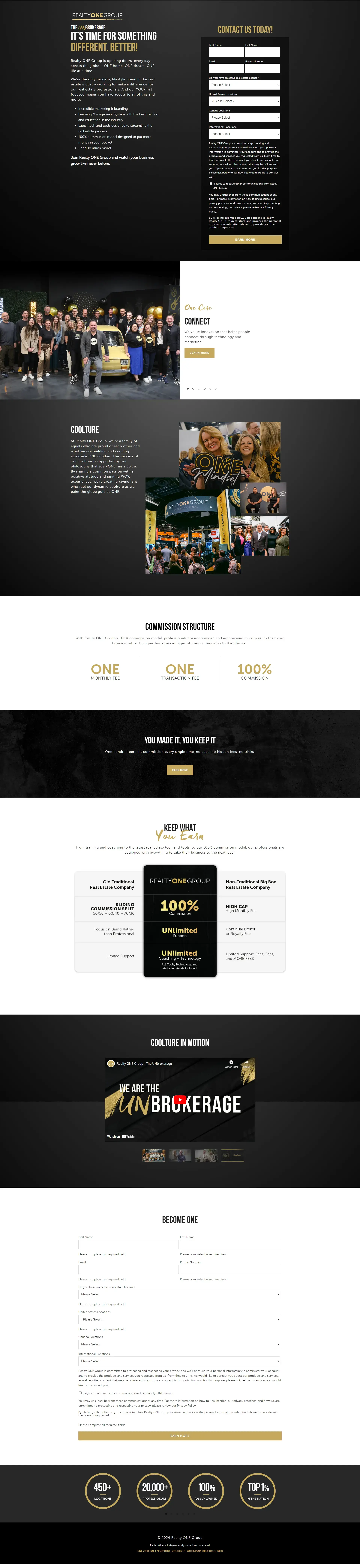
Publish “answer‑ready” guides for commission splits, brokerage models, onboarding checklists, and non‑NAR brokerage FAQs. Lead with TL;DRs and side‑by‑side comparisons. Include decision trees like “If you close X deals per year, this model yields Y more net.”
Structured data for agentic flows
Expose office locations, service areas, MLS coverage, transaction fees, E&O details, and caps as machine‑readable facts. Provide an API to prefill onboarding forms and to request broker‑of‑record eligibility checks.
Voice in the recruiting funnel
Offer a voice agent that qualifies candidates, answers compensation questions, schedules a broker call, and texts confirmation. Make the experience interruption-tolerant and human‑handoff friendly.
Discover for top‑of‑funnel demand
Turn your recruiting playbook into 30–60 short posts: “Script: How to win your first listing,” “Checklist: Probate prospecting week 1,” “Template: Post‑close follow-up.” Ask readers to follow you in Google to get the next installment.
Agentic UX for transactions and teams
If you run a brokerage, create endpoints for fee disclosures, cap progress, and team member onboarding status so assistants can answer agents instantly without tickets.
Risk, Governance, and Quality
AIVSO success depends on trust. Put guardrails in place:
Source integrity: Maintain a private source library and citations for your writers. Require second‑person review for regulated claims.
Update cadence: Set review schedules for compliance-sensitive content. Show last‑review dates and change logs.
AI usage policy: Disclose where AI helps draft or summarize and how humans review. Keep a human in the loop for material changes.
Security and consent: Encrypt data in transit for agent endpoints, scope permissions tightly, and log all machine‑initiated actions.
Incident response: Create a playbook for wrong answers, agent mistakes, or misattribution. Move fast to correct and explain.
Common Pitfalls (and How to Avoid Them)
Optimizing for links you no longer receive. Measure citations and on‑SERP actions, not just sessions.
Publishing walls of text. Summaries and structured blocks win extraction and feed visibility.
Letting schema decay. Broken, out‑of‑date structured data harms trust and downstream agent behavior.
Ignoring follow mechanics. If you don’t ask for the follow and post consistently, you won’t build owned distribution.
Leaving agents to guess. Without endpoints and rules, agents won’t complete tasks—and you won’t convert.
Treating voice as a novelty. Latency is low enough now that voice can sell, support, and schedule. Make it part of the core funnel.
The AIVSO Mindset Shift
AIVSO asks a different question than SEO did. SEO asked: “How do I rank so people click?” AIVSO asks: “How do I become the source and system that answers, convinces, and completes?” You still care about technical health and rankings—but you now design content and infrastructure for:
Clarity: so answers are extractable and useful.
Context: so agents can reason about suitability.
Control: so your systems can safely take action.
Continuity: so you retain users via follows and feeds.
Commerce: so revenue happens wherever the user decides.
When you optimize for these, the clicks you do earn tend to be higher quality—and increasingly, you’ll convert without a traditional click at all.
FAQs
Is SEO dead?
No. It’s evolving. Classic organic real estate is smaller, but the skills that made great SEO—technical quality, intent alignment, information architecture—remain critical. The difference is that you now optimize for answers, agents, and feeds alongside rankings.
How do I tell if AI is using my content?
Look for your brand, domain, and authors as cited sources in answer experiences. Track brand mentions, on‑SERP actions tied to panels and carousels, and branded search growth. Deploy monitoring that logs when your structured data is requested by known agent IP ranges.
What makes a page “answer‑ready”?
A clear TL;DR, definitional sentence, scannable headings, short paragraphs, explicit pros/cons and comparisons, and citations to primary sources. Include a conversational summary block for voice.
Should I gate my content to stop scraping?
Gate selectively. Public, cite‑worthy content seeds brand and trust; premium datasets, calculators, and proprietary research may merit a token or bot paywall. Balance visibility with economics.
How do I show up in Discover?
Publish consistently. Repurpose long‑form into snackable assets. Use strong visuals and narrative hooks. Earn follows with helpful, save‑worthy posts. Make sure your entity and site quality signals are solid.
What’s an “agent‑friendly” site?
Predictable forms, clear rules, machine‑readable endpoints, and transparent consent scopes. If a human knows how to complete the task based on what’s on the page, an agent should too.
Do voice agents actually convert?
Yes—especially for repeatable, high‑intent tasks like booking, qualifying, and troubleshooting. Keep scope focused, measure completion and CSAT, and escalate to humans when the path isn’t clear.
How do I align legal/compliance with AIVSO?
Create an editorial standard with sourcing rules and review cadences. Add compliance review for regulated content. Publish last‑review dates and policies. Log agent actions and maintain audit trails.
What KPIs should I share with leadership?
AIO citation share, on‑SERP actions, Discover follows and saves, agent‑assisted conversions, revenue per follow, and branded search growth. Explain how each maps to pipeline and revenue.
How much content do I need to publish?
Quality beats volume, but cadence matters for feeds. Aim for 2–4 cornerstone pieces per month, each repurposed into 6–10 snackable assets. Publish updates as standards change.
Where do I start if I have limited resources?
Pick your top five intent clusters that drive revenue. Convert those pages into answer hubs, fix core schema, ship a Discover pack, and stand up a small voice pilot tied to one conversion path.
What about long‑form research?
Keep making it, but design with extraction in mind. Provide executive summaries, charts, and tables that can be lifted. Pair each report with a short “What to do next” guide and a feed series.
How do I prevent hallucinations with my brand?
Publish authoritative, unambiguous statements about your offerings, policies, and pricing. Keep data fresh. Where appropriate, offer machine-readable facts via API so agents pull from the source of truth.
What’s the fastest path to ROI?
Convert your top evergreen pages into answer hubs, add on‑SERP lead capture and call actions, and ask for Discover follows on every asset. Then add a voice agent to reduce service load or qualify leads.
How will this evolve over the next year?
Expect more agentic behaviors (comparison, booking, negotiation), deeper multimodality (camera-first troubleshooting, live translation), and tighter integration between feeds and search. Brands that earn follows and expose usable data will grow faster than those that cling to clicks.
Conclusion
The era of link-first search is ending. The era of answer‑and‑agent‑first discovery is here. That’s not bad news—it’s a mandate to evolve. If you become the source that answers, the system that acts, and the brand people follow, you’ll grow even as zero‑click rises. AIVSO is how you get there, methodically and measurably.
If you want my team to turn this playbook into a done‑for‑you roadmap—with an AIVSO audit, an answer‑hub sprint, a Discover content kit, and a scoped voice pilot—reach out. Let’s ship this in 90 days.
About MNKY Agency
MNKY Agency is a real estate agent recruitment and growth partner specializing in AIVSO—AI, Voice & Search Optimization—so your brand shows up (and gets chosen) across answer engines, voice, and feeds. We recruit for all brokerages on a $100‑per‑closed‑transaction pay‑per‑transaction model with no monthly or annual fees. Our focus is building the systems that turn zero‑click reality into measurable pipeline and revenue.
About the Author
J. Stuart Hill is in his 20th year building real estate marketing and recruitment systems. He coined AIVSO and leads MNKY’s work turning AI answers, voice agents, and feed distribution into competitive advantage for brokerages and teams. When he’s not shipping growth systems, he’s producing unfiltered commentary on the future of recruiting and marketing in real estate.
Let’s Get Growing.